Chrissy Chambers: First UK Revenge Porn Civil Win
How YouTuber Chrissy Chambers won the UK's first reported civil revenge porn case in 2018 and built the legal template every IBSA claim has used since.
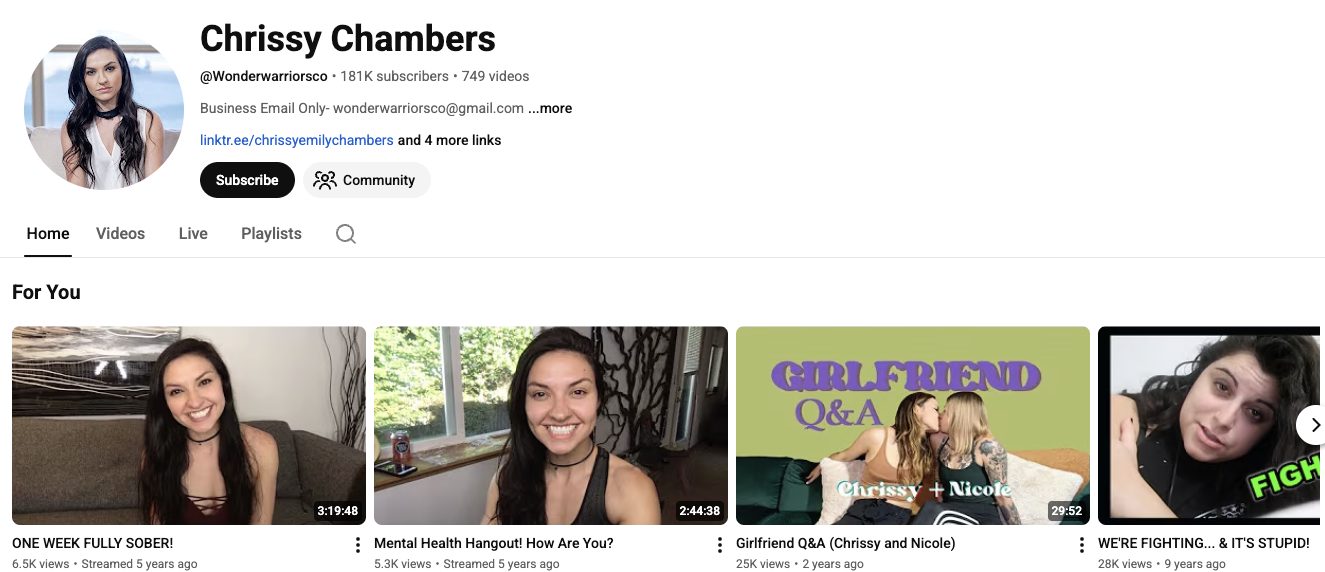
If you've searched Chrissy Chambers revenge porn case, first UK revenge porn civil case, or YouTuber revenge porn lawsuit, here's the full story of why this case still matters in 2026.
Who Chrissy Chambers is
Chrissy Chambers is a Los Angeles-based singer, actor and YouTuber. With her then-partner Bria Kam she ran the channel BriaAndChrissy, which built a multi-million-subscriber following in the early 2010s, largely around LGBTQ+ acoustic covers and personal storytelling.
In 2010, while studying in Atlanta, Chambers was in a year-long relationship with a British man identified in court papers as the defendant (anonymised as DCR). She was 18–19 at the time. After the relationship ended she returned to the US.
What happened: secretly filmed, then uploaded
Two years later, in 2013, Chambers discovered that Gibson had secretly recorded at least seven sexually explicit videos of her on his phone while she was passed out drunk during their relationship. He uploaded the footage to a major commercial porn site under her real name. Within months the videos had been viewed hundreds of thousands of times and re-uploaded to dozens of mirror sites.
Chambers, who is openly gay and was building a public career, found the videos circulating among her audience and family. She has spoken publicly about the post-traumatic stress, panic attacks and alcohol dependency that followed.
Why the criminal route was a dead end
Chambers reported Gibson to Avon and Somerset Police in 2014. The case dragged. England and Wales did not get a dedicated revenge porn offence until section 33 of the Criminal Justice and Courts Act 2015 came into force on 13 April 2015 — and that law was not retrospective, meaning conduct from 2010–2013 could not be prosecuted under it.
In 2015 the CPS dropped the criminal case, citing insufficient evidence and difficulties around jurisdiction (offence in the UK, victim in the US, content uploaded to US-hosted sites). For Chambers, that was the moment the criminal system effectively closed its door.
The landmark civil claim
Chambers and her UK solicitor Ann Olivarius (McAllister Olivarius) switched tactics. They sued the ex-boyfriend (anonymised by the court as DCR) in the High Court in London for misuse of private information, breach of confidence and harassment — the same trio of common-law torts that Georgia Harrison would later use in 2023.
On 17 January 2018, the case settled at the High Court. Gibson agreed to pay substantial damages (the exact figure was kept confidential, but the Telegraph and Times reported it as a five-figure sum) and to permanent injunctions banning him from possessing, copying or distributing any image of her, plus the assignment of copyright in the videos to Chambers herself — letting her issue takedowns directly.
It was the first reported UK civil revenge porn judgment in favour of a victim.
Why this case still shapes UK image-based abuse law
Chambers' case did three things that hadn't been done before in England and Wales:
Established the civil playbook. The combination of misuse of private information + breach of confidence + harassment is now the standard pleading in every IBSA civil claim, including FGX v Gaunt and Harrison v Bear.
Won the copyright transfer. Forcing the perpetrator to assign copyright in intimate footage to the victim is now a routine remedy — it is the single most effective tool for getting content removed from porn sites under the DMCA and equivalent EU/UK takedown regimes.
Proved you don't need a criminal conviction. The civil court applies the lower balance of probabilities standard. Many victims whose criminal cases are dropped (still the majority) can recover substantial damages this way.
The harder version of this story for victims today
Chambers had things most victims don't: a co-host platform, an existing public profile, a US legal network and eventually a top UK lawyer who took the case partly on its strategic value. She still spent almost five years between discovery and resolution.
In 2026 the criminal law is far better than it was in 2015 — the Online Safety Act 2023 inserted section 66B into the Sexual Offences Act 2003, removing the "intent to cause distress" requirement that historically broke cases. But the practical bottlenecks Chambers hit are still there: cross-border content, slow takedowns, and a shortage of lawyers willing to run civil claims for ordinary clients.
The lesson her case still teaches: the more documentation a victim can produce showing the content was private and that distribution was never agreed to, the faster and cheaper every step of the system gets. Chambers had no such documentation in 2010 — she had to spend years constructing it after the fact through phone records, hosting logs and witness statements.
Was Chrissy Chambers' case the first UK revenge porn case?
Why did the criminal case against the ex-boyfriend collapse?
How much did Chrissy Chambers win?
Can you sue someone in the UK for sharing intimate images without consent?
Read next
Georgia Harrison v Stephen Bear: What the Case Tells Us · Revenge Porn Laws in the UK (2026)